

Digital Work Instructions
Why Now Is the Time to Start Digitizing Your Work Instructions
For many manufacturers and industrial organizations, the question is no longer whether work instructions should become digital. The more important question is how quickly a company can get started.
Paper procedures, PDFs, Word documents, tribal knowledge, and shared folders have supported operations for decades. But as experienced employees retire and companies face growing pressure to improve productivity, quality, training, and compliance, traditional approaches to work instructions are becoming harder to sustain.
The good news is that digital transformation does not have to begin with a massive technology rollout. Companies can start small, digitize the procedures that matter most, learn from the process, and expand from there. Whether a company builds internally or outsources procedure creation, the most important step is simply getting started.
The Benefits and ROI of Digital Work Instructions
Before looking at how to get started, it helps to understand why companies are making the investment. Recent research provides a strong business case for improving how information reaches frontline workers.
Deloitte’s 2025 Smart Manufacturing Survey found that manufacturers implementing smart manufacturing initiatives reported average improvements of 10 to 20 percent in production output, 7 to 20 percent in employee productivity, and 10 to 15 percent in unlocked production capacity. Deloitte has also estimated that giving frontline workers a thoughtful mix of technology and digital tools can increase productivity by an average of roughly 22 percent.
These figures extend well beyond work instructions alone, but they point to something important: giving employees better digital access to the guidance and tools required to do their jobs creates measurable operational value. Digital work instructions can contribute to that improvement by helping organizations:
- Standardize how work is performed
- Reduce reliance on tribal knowledge
- Decrease procedural errors
- Accelerate employee onboarding
- Improve inspection and maintenance consistency
- Capture photos, measurements, and other evidence during the work
- Build stronger documentation and audit trails
- Preserve knowledge from experienced employees
The return on investment becomes especially clear when companies consider the hidden cost of the alternative. What does it cost when a technician spends fifteen minutes searching for the correct procedure, or when a missed inspection step leads to unnecessary rework? Individually these events seem small. Across hundreds of employees and thousands of procedures, they add up to real operational expense. Digital work instructions are ultimately about getting the right information to the right employee, at the right time, in a format they can easily follow.

The Challenges With Creating Your Own In House Work Instructions
Recognizing the value of digital procedures is usually the easy part. Creating them is where most initiatives slow down. Most companies already have an enormous amount of procedural knowledge, but it is scattered across the organization in SOPs, Word documents, spreadsheets, and shared drives, and some of the most valuable knowledge is not documented anywhere at all. It lives with the technician who has run a machine for twenty years, or the inspector who knows exactly what to look for. Capturing that knowledge takes real time, and organizations building digital work instructions internally tend to run into the same set of obstacles.
Subject matter experts are already busy. The people who know a process best are valuable precisely because they are doing the work. Asking them to step away from production, maintenance, or quality duties to write procedures creates a competing priority.
Knowing a process is not the same as knowing how to document it. A skilled technician can be excellent at performing a task while still struggling to translate years of experience into a simple, step by step procedure someone else can follow.
Procedure creation takes longer than expected. Taking photos, recording video, writing steps, formatting content, and gaining approvals can turn a project that looked simple into months of work.
Existing procedures may be outdated. Digitizing an old SOP without validating it just turns an outdated paper process into an outdated digital one.
Consistency becomes difficult. If ten employees each write their own procedures, a company can easily end up with ten different formats, writing styles, and levels of detail. Companies searching for the fastest way to digitize work instructions should think about more than software alone. They also need a plan for who will capture, create, review, organize, and maintain the content.
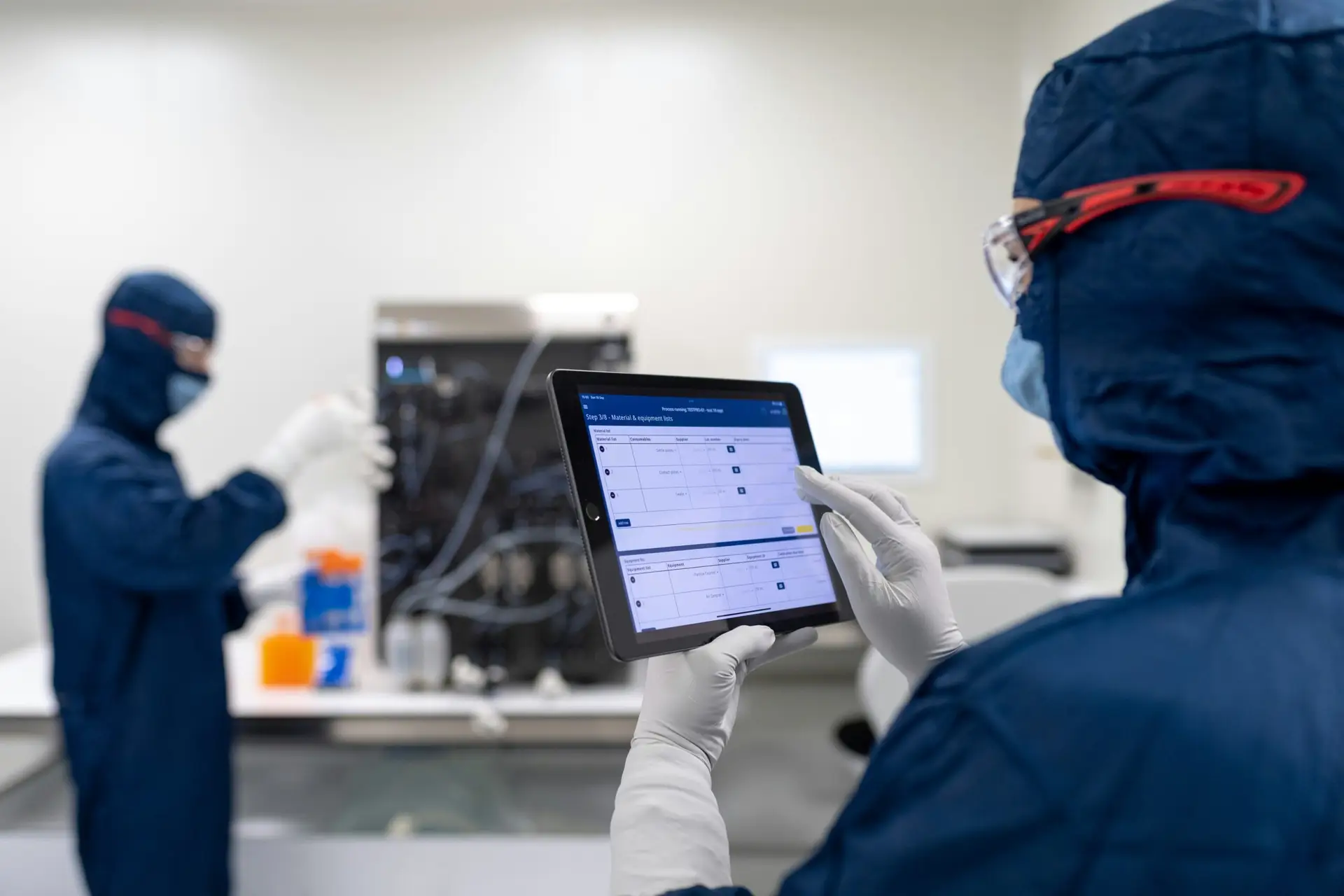
Outsource Procedure Creation or Do It Yourself
There is no single correct approach to procedure digitization. Some companies should create most of their work instructions internally. Others benefit significantly from outsourcing the initial procedure creation. For many organizations, the best approach is a combination of both.
Creating procedures in house. The biggest advantage of internal procedure creation is knowledge. Employees understand a company’s equipment, processes, terminology, and operational environment better than an outside provider will on day one, and building the skills internally can make long term maintenance easier.
- Complete internal control over content
- Direct access to subject matter experts
- Deeper understanding of company specific processes
- Internal ownership of procedure development
- Development of long term authoring skills
- Potentially lower outside service costs
The disadvantage is time. Internal teams frequently lack dedicated hours for procedure creation, and a project that was supposed to take three months can easily stretch into a year once daily operational priorities take over.
Outsourcing procedure creation. Outsourcing takes a different approach. Instead of asking an internal team to learn a new system, develop standards, capture procedures, and manage an entire project, an outside team helps establish the process and does much of the initial work.
- Faster initial deployment
- Less administrative burden on internal employees
- Consistent procedure formats
- Experienced procedure capture and authoring resources
- Faster conversion of existing SOPs and documents
- Clearer project timelines and deliverables
The primary disadvantages are cost and the need to coordinate with an outside team. An external provider still needs access to subject matter experts and time to understand the process, equipment, and expected outcomes. Outsourcing does not eliminate internal involvement, it simply lets experts focus on transferring and validating knowledge rather than performing the administrative work of building the final procedure. For companies asking how to quickly convert SOPs to digital work instructions, this hybrid approach can be especially effective.
How Outsourcing Procedure Creation Can Benefit a Company
One of the biggest benefits of outsourcing is speed. Consider a highly experienced maintenance technician whose value comes from diagnosing equipment, preventing downtime, and transferring technical knowledge. Asking that person to spend hours formatting documents, editing photos, and learning a new authoring platform is rarely the best use of their time. A procedure creation specialist can instead work alongside the technician, capture the process, build the digital procedure, and return it for validation. The subject matter expert stays responsible for the knowledge, while the specialist handles the documentation, which meaningfully reduces the internal burden of digitization.
Outsourcing can also help establish a repeatable standard. Before creating hundreds of procedures, companies need to answer a few basic questions:
- How detailed should each step be?
- When should a photo be used instead of a video?
- What information should an operator capture?
- How should warnings and safety information appear?
- How should procedures be named and organized?
- Who reviews and approves them?
A good outside partner should do more than convert documents. The goal should be to help an organization establish a sustainable process its own employees can eventually manage. Outsourcing does not have to mean outsourcing forever. In many cases, the ideal model uses outside resources to accelerate the start of the project, establish standards, build an initial library, train internal authors, and gradually shift more procedure creation back to the organization.
The Importance of Getting Started Now
The biggest mistake companies make with procedure digitization is often waiting for everything to be perfect. Organizations sometimes believe they need to digitize every SOP, choose every device, and build a complete business case before starting. They do not. The better approach is to identify one meaningful operational problem and start there:
- Choose a production line
- Choose a piece of equipment
- Choose an inspection
- Choose a preventative maintenance procedure
- Choose an equipment training or certification process
Digitizing a small group of procedures and putting them into the hands of real users lets an organization learn what works before scaling. McKinsey’s 2026 research into manufacturing production systems shows why implementation matters: in a survey of more than one hundred manufacturing COOs, 74 percent said their company had a global production system, but only 29 percent reported it was fully implemented across all sites. Having a strategy is not the same as operationalizing it. A perfect digitization strategy sitting in a slide deck creates very little operational value. Ten well designed digital procedures being used by employees today can.
Companies trying to determine how to digitize work instructions quickly should resist the temptation to make the first project too large. Start with a measurable use case, such as:
- Reduce missed quality checks
- Improve completion of preventative maintenance procedures
- Decrease training time for a specific piece of equipment
- Reduce setup errors
- Improve documentation for compliance
Then establish a baseline, digitize the workflow, put it into operation, and measure the result. The first project does not need to transform the entire organization. It needs to prove that the process works.
What to Look for in Digital Work Instruction Software
Technology still matters. The best digital work instruction software should make both procedure creation and procedure execution simple, without requiring highly specialized technical skills to build content. Look for software that turns existing content and subject matter expertise into usable, step by step instructions without months of development, and that lets employees access instructions on devices already available to them, such as tablets, phones, and computers. The initial objective should be straightforward: make procedures easy to create, easy to update, easy to find, and easy to follow. Once that foundation exists, organizations can expand into required evidence, automated verification, system integrations, and analytics.
Start Digitizing Work Instructions Today
Every organization has procedures that should be better documented, knowledge that lives mainly in the heads of experienced employees, and processes where a missed step or outdated instruction creates unnecessary cost. The question is how long that knowledge should remain difficult to access. If a company has been discussing digital procedures for months or years, the answer does not have to be another planning meeting.
- Choose five procedures
- Choose one piece of equipment
- Choose one inspection process
- Choose one maintenance workflow
Then decide whether the team has the time and resources to build the procedures internally or whether outside help could move things faster. If a hybrid approach makes the most sense, bring in outside expertise to establish the process while developing the internal team.
The companies that benefit most from digital transformation are rarely the ones with the largest strategy. They are the ones that turn strategy into something employees can actually use. The first digital procedure does not need to be perfect, and the first project does not need to cover an entire facility. It simply needs to move the organization forward.
Get started now. Capture the knowledge. Digitize the procedure. Put it into the hands of the workforce. Measure the result. Then expand from there.